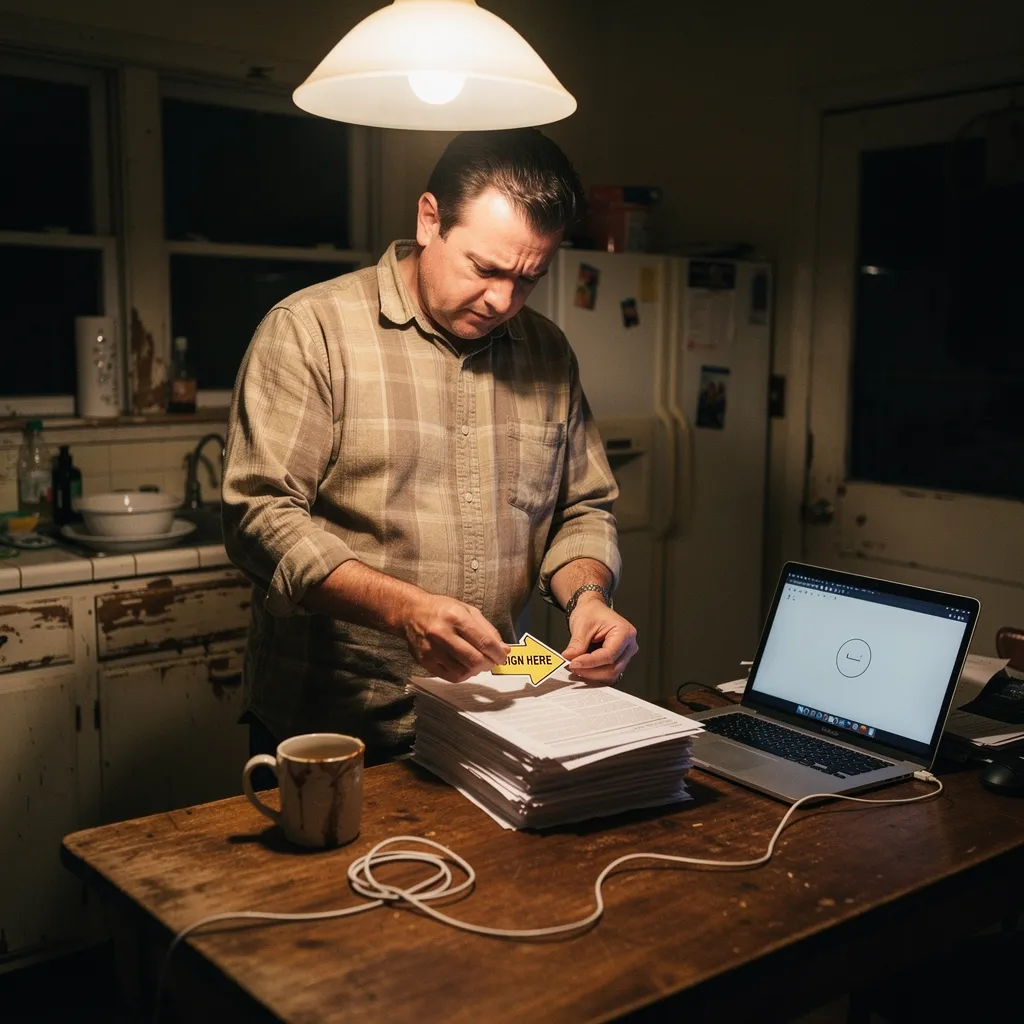
A cash reserve that covers three to six months of fixed operating costs is the standard target - and missing it's expensive. Businesses that absorb a financial shock without reserves tend to carry that gap into the next crisis, compounding the damage each time.
Small Business Emergency Funds for Stability: The Plain Answer
An emergency fund for a small business is a dedicated, liquid cash reserve held separately from operating accounts. Its only job is to cover fixed obligations - rent, payroll, utilities - insurance - when revenue drops or an unexpected cost hits. The CFPB notes that even a small amount set aside for an emergency can provide meaningful financial security,1 and that principle scales directly to a business context.
The standard guidance is three to six months of fixed operating expenses. A business with $15,000 in fixed monthly costs should aim for $45,000 to $90,000 in reserve. That range is wide on purpose: a business with predictable - contract-based revenue can sit closer to three months; a business with highly seasonal or volatile revenue should push toward six.
Worked example: a small retail shop with $8,500 in fixed monthly costs - rent, two part-time wages, utilities, insurance - needs a minimum reserve of about $25 -500 to cover three months. At the six-month end, that target rises to $51,000. The difference between those two numbers is roughly $25,500, which is also roughly the difference between surviving a slow quarter and not surviving it.
How a Business Reserve Actually Functions Under Pressure
The reserve works by decoupling survival from current revenue. Without it - every revenue shortfall creates an immediate obligation problem - late payroll, missed rent, defaulted vendor terms. With it, the business buys time: time to cut costs, draw new clients - apply for assistance, or simply wait out a short disruption.
Research cited by Keiser University found that about 80% of organizations that suffer a significant operational outage without a continuity plan fail within 18 months2. A funded reserve is the financial component of that continuity plan. It doesn't replace the plan, but it's the part that keeps the lights on while the plan is executed.
The CFPB observes that individuals who struggle to recover from a financial shock tend to have less savings available to protect against the next one.1 The same dynamic applies to businesses: a reserve that gets drained and never rebuilt leaves the business more exposed after each event, not less.
The reserve should sit in a high-yield business savings account or a money market account - somewhere liquid, separate from the operating checking account - and not co-mingled with owner personal funds. The physical separation prevents casual drawdowns and makes the balance visible.
What It Costs to Build One - and What It Saves
Building a reserve has a real opportunity cost. Cash sitting in a savings account earns a modest yield and isn't being deployed into inventory, equipment, or marketing. That tradeoff is worth naming honestly: a reserve is insurance, not an investment. It has a cost, and the cost is the foregone return on that capital.
The CFPB recommends setting up automatic recurring transfers as one of the most reliable ways to make savings consistent.1 For a business - this means a fixed automatic transfer from the operating account to the reserve account on each payroll or billing cycle - treated as a non-negotiable line item, not a discretionary deposit when cash looks comfortable.
Side-by-side comparison: SBA Economic Injury Disaster Loans charge 3.75% interest for small businesses with repayment terms up to 30 years, according to the SBA.3 A $50,000 EIDL at 3.75% over 10 years carries a monthly payment of roughly $500 and total interest of about $10,000. A $50 -000 self-funded reserve, built over 24 months at $2,085 per month, costs nothing in interest and carries no debt obligation3. The SBA loan is a genuine option - the SBA offers up to $2 million per affected small business through its disaster assistance program - but it requires a declared disaster, an application process - and takes on debt at the moment the business is already under stress. The reserve is available immediately, without an application.
Local programs exist as supplements, not replacements. As one reference point, Cuyahoga County's Stabilization Fund, as reported by the county government - had over $4 million in combined grants and loans, with $500,000 specifically in grant funds available as of April 20204. Those pools fill fast and carry eligibility conditions. They're worth knowing about, but planning around them as a primary buffer isn't sound financial strategy.
Common Questions After the Reserve Is Funded
How liquid does it need to be? Fully liquid. The reserve should be accessible within one business day without penalty. Certificates of deposit and Treasury bills aren't appropriate vehicles for this money. A business money market or high-yield savings account is the standard choice.
Should the reserve be split? Some businesses hold a smaller, immediate-access reserve - perhaps one month of fixed costs - in the operating bank's savings account - and a larger reserve earning a slightly better yield in a separate institution. That structure is reasonable. The risk is complexity: it's easier to leave the larger account alone when it's not visible in the daily banking dashboard.
What triggers a drawdown? The clearest rule is this: the reserve covers fixed obligations when operating revenue is insufficient to cover them, and it's not used for growth spending, equipment upgrades, or opportunity investments. Drawdown triggers should be written down. A business that has no written policy tends to raid the reserve for things that feel urgent but aren't actual emergencies.
How fast should a depleted reserve be rebuilt? Rebuild at the same priority as the original build - as a fixed, automatic transfer - starting in the first month after the crisis ends. Partial rebuilds left unfinished become permanent under-reserves.
What People Get Wrong
First: confusing a line of credit with a reserve. A business line of credit is a liability. Drawing it during a crisis adds debt at the moment revenue is already down - which tightens cash flow further through repayment obligations. A reserve is an asset. The two serve different functions, and having a line of credit isn't the same as having funded reserves.
Second: sizing the reserve to revenue instead of fixed costs. A $500,000-revenue business with $200,000 in fixed annual costs needs a reserve based on that $200,000 figure - roughly $50 -000 to $100,000 - not some percentage of top-line revenue. Variable costs drop when revenue drops. Fixed costs don't.
Third: assuming disaster programs will arrive in time. SBA disaster assistance loans, while offering meaningful terms - 3.75% interest and repayment periods up to 30 years3 - require a federal or state disaster declaration, an application, processing time - and approval. During the early months of the COVID-19 period, processing times stretched to weeks or months. A business with no reserves can't wait that long.
Fourth: treating the reserve as the owner's personal safety net. Owner draws from the business emergency fund to cover personal expenses blur the line between business and personal finances, expose the business to additional risk, and in some entity structures carry tax and legal complications. The reserve exists to keep the business operating, not to supplement owner income.
When to Talk to a Professional
The general framework above is sound - but specific sizing, account structure, and tax treatment vary by business type, entity structure, and jurisdiction. A CPA or business financial advisor can help determine the right reserve target for a specific cash flow profile - advise on the most tax-efficient way to hold those funds, and integrate the reserve into a broader business continuity plan. If the business operates in an industry with specific regulatory requirements around liquid capital - financial services, healthcare, certain contractors - a professional should review the structure before the reserve is finalized. This article is general financial information, not professional advice for any specific business situation.
A funded reserve is right for any business owner who depends on the business for income and can't absorb a month or two of zero revenue without personal financial damage. It's less urgent for a business with a large existing credit facility - strong receivables, and a well-diversified client base - though even those businesses benefit from the operational certainty a reserve provides. Owners who are just starting out and can't yet fund a full reserve should start smaller: even one month of fixed costs held in a separate account is a meaningful first step, and one the CFPB's own research on emergency savings supports.1 Build from there.
References
- https://www.consumerfinance.gov/an-essential-guide-to-building-an-emergency-fund/
- https://www.keiseruniversity.edu/articles/business-continuity-vs-disaster-recovery/
- https://www.sba.gov/article/2020/mar/17/sba-updates-criteria-states-requesting-disaster-assistance-loans-small-businesses-impacted
- https://cuyahogacounty.gov/development/businesses/small-business-stabilization-fund-faq
Disclaimer
This article is for general informational purposes only and doesn't constitute professional, financial, medical - or legal advice. Consult a qualified professional about your specific situation.