The price of auto insurance isn't random. Insurers score dozens of specific factors about you, your vehicle, and your driving history before they quote a single dollar. Understanding which of those factors you can control - and which you can't - is the most direct route to paying less without sacrificing real protection.
The Auto Insurance Features That Affect Premiums Most - Start Here
According to the National Association of Insurance Commissioners (the NAIC), the main rating factors for auto insurance include location, age - gender, marital status, driving experience, driving record, claims history - credit history, previous insurance coverage, vehicle type, vehicle use, miles driven - and the specific coverages and deductibles a policyholder selects.1 That's the full map. Most buyers focus narrowly on the car; insurers are looking at all of it simultaneously.
The single most actionable starting point is the deductible. The NAIC notes that lower premiums can result from the policyholder accepting more risk, such as increasing the deductible - the amount paid out-of-pocket before insurance pays anything.1 A worked example: if a thorough claim on a $22,000 vehicle comes in at $3,000 in damage, a $500 deductible means the insurer pays $2 -500; a $1,500 deductible means the insurer pays $1,500. The higher deductible can cut annual premium noticeably, but the out-of-pocket exposure in a bad year nearly triples. That tradeoff is real and worth pricing explicitly before choosing.
Before anything else, pull your own driving record and credit report. Both feed directly into what you're quoted - and errors on either one will cost you money immediately.
The Main Coverage Types and What Each One Is Actually For
Liability coverage pays for damage and injury you cause to others. It's legally required in most states and is the floor, not the ceiling, of a sensible policy. Collision coverage pays to repair or replace your own vehicle after a crash, regardless of fault. Thorough coverage pays for non-collision losses - theft, fire - flood, falling objects. Uninsured and underinsured motorist coverage steps in when the at-fault driver carries no insurance or insufficient limits.
Personal injury protection (PIP) and medical payments coverage handle medical costs for you and your passengers. These matter most in no-fault states, where your own insurer pays your medical bills regardless of who caused the accident.
Side-by-side: a driver who carries only state-minimum liability on a five-year-old car worth roughly $8,000 might pay significantly less per year than a driver who adds collision and thorough to a financed vehicle worth $35,000 - but the first driver absorbs 100 percent of their own vehicle repair costs after any at-fault accident. That gap isn't a savings; it's a transferred risk.
Vehicle and Driver Factors That Underwriters Actually Check
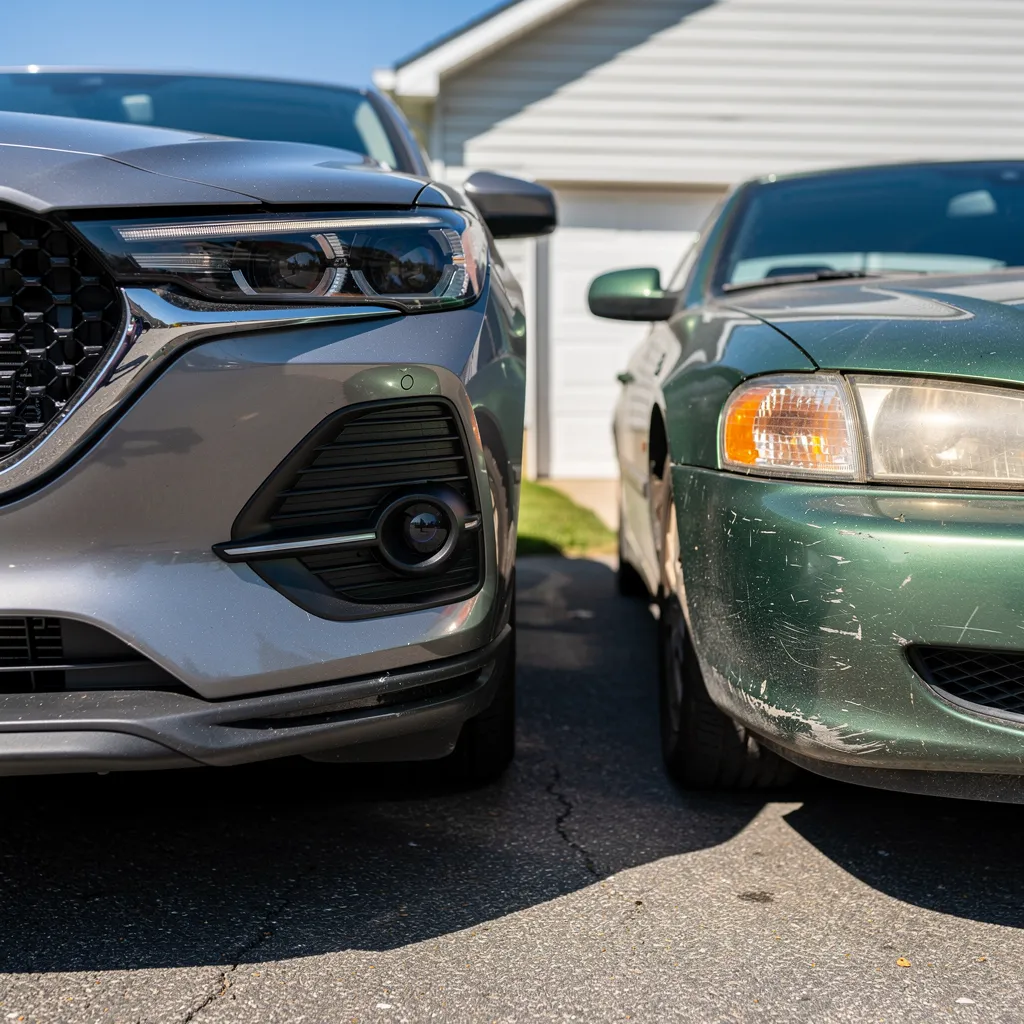
According to insurance.wa.gov - the make, model, and year of a car determine how expensive it would be to repair or replace - and that cost feeds directly into the premium.2 A vehicle with expensive parts, a high theft rate, or a poor crash-test record costs more to insure than a plain sedan with cheap replacement parts and strong safety scores. This is verifiable before purchase: insurers and independent rating services publish loss data by vehicle model.
Driver history is scrutinized carefully. The Maine Bureau of Insurance states that companies ask for information about accidents and moving violations or convictions for any driver to be covered by the policy for the prior three to five years.3 Insurers also ask about any claims that any listed driver had during the past three to five years.3 A single at-fault accident or DUI conviction can raise premiums substantially and stay on the rating period for the full window.
According to insurance.wa.gov - companies can use age, credit history, education, gender, marital status - employment status, and occupation as rate factors - though which factors are permitted varies by state law.2 The Maine Bureau of Insurance notes that statistics show males have more accidents than females, and that some age groups have higher claim rates than others.3 The Maine Bureau also notes that claims records indicate married policyholders have fewer claims than unmarried policyholders.3 Insurers price those statistical patterns directly into individual quotes.
The Downsides That Most Buyers Don't Hear About
Raising the deductible to cut premiums is the most commonly recommended tactic - and it works - but only if the policyholder actually has the deductible amount available in liquid savings. A $2,000 deductible on a policy with a $300 annual premium saving is a poor trade for someone who couldn't cover that $2,000 out of pocket in a bad month. The premium saving is certain; the deductible payment is contingent but real.
According to insurance.wa.gov, where a car is kept matters significantly - a vehicle garaged in a dense urban area with high theft and accident rates will be priced differently than the same vehicle kept in a rural zip code.2 Buyers who move and delay updating their insurer risk claim denials on the grounds of material misrepresentation.
Adding a young or inexperienced driver to a policy raises the household premium measurably. Insurance.wa.gov notes that the number of drivers and their driving experience is used to determine premiums.2 Some families attempt to list a young driver under a separate policy at a different address to avoid this - a practice called fronting, which constitutes insurance fraud and can void a claim entirely.
Telematics programs - where an insurer monitors actual driving behavior via an app or device - can lower premiums for careful drivers. They can also raise them - or flag risky patterns. Read the program terms before enrolling.
How to Buy a Policy Without Overpaying or Underprotecting
Compare quotes from multiple carriers using identical coverage terms, not just price. Two quotes at different liability limits or deductibles aren't comparable. Lock the variables first: same limits, same deductible, same listed drivers, same vehicle.
The NAIC's Auto Insurance Database Report provides national and state-level data on average personal auto insurance costs and is updated annually.1 That report is publicly available and gives a benchmark for whether a quote is in a reasonable range for a given state. In 2020 - the NAIC's Property and Casualty Insurance Committee adopted the Private Passenger Automobile Study, which reviews auto insurance affordability on a state-by-state basis.1 Both resources are free and worth consulting before signing anything.
Don't drop coverage to minimum limits just to cut costs on a financed or leased vehicle. Most lenders require thorough and collision by contract, and dropping below that level triggers a force-placed policy - which covers the lender's interest, not the driver's, and is almost always more expensive than maintaining proper coverage directly.
Ask each insurer explicitly about every discount they offer: multi-policy - multi-vehicle, good driver, defensive driving course completion, low annual mileage, vehicle safety features. Discounts aren't automatically applied in all cases. Ask for them by name.
Where This Stops Being Enough
The guidance above is general. Auto insurance pricing varies significantly by state - by insurer, and by individual circumstances - the NAIC notes that its own affordability study reviews the market state-by-state because conditions differ that much.1 State insurance commissioners regulate which rating factors are permitted in each jurisdiction; a factor that's legal in one state may be banned in another.
If a claim is denied, a policy is cancelled mid-term, or a quote looks significantly out of range, a licensed independent insurance agent or a state-licensed public adjuster is the right professional to consult for the specific situation. For complex liability situations - a household with multiple drivers - significant assets to protect, or a history of claims - an independent agent who has access to multiple carriers will give more useful advice than any general article can. Contact the insurance regulator in the relevant state for a list of licensed professionals, or use the NAIC's consumer resources at naic.org to find state-specific guidance.
Get qualified professional advice for your own situation before making coverage decisions. The stakes on an underinsured claim are too high to rely on general information alone.
References
Disclaimer
This article is for general informational purposes only and isn't financial, investment, insurance - or tax advice. Rates, fees, and rules change and vary by lender and situation. For decisions about your own money, consult a qualified financial professional.