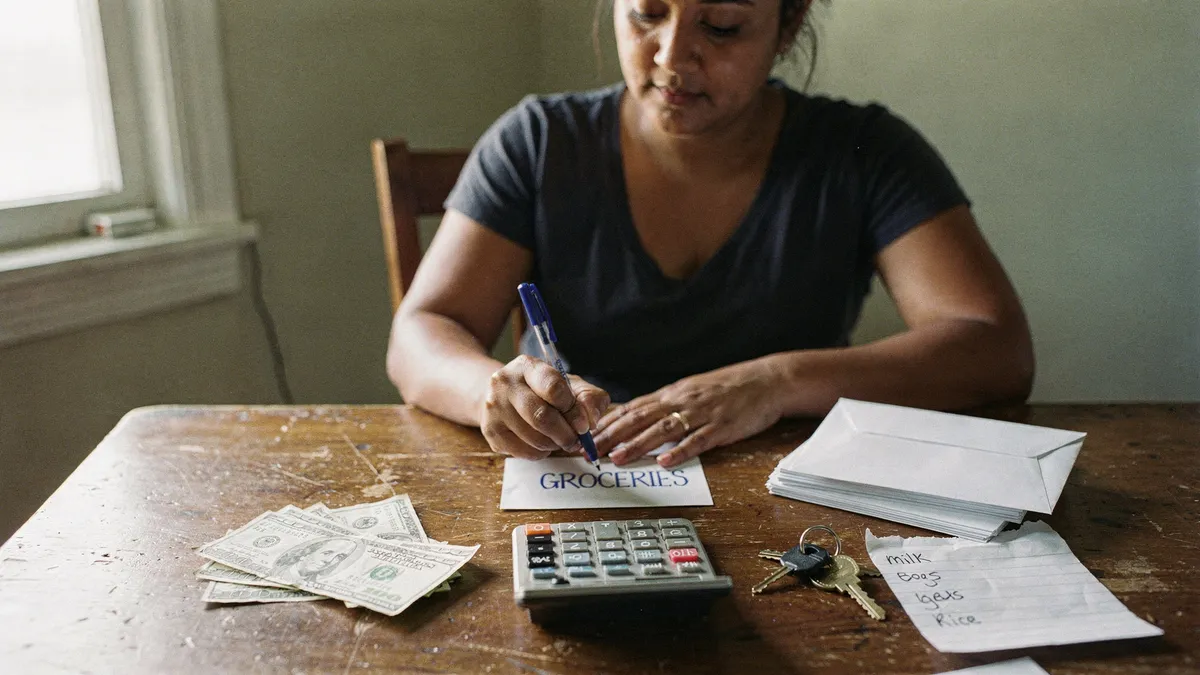
Creating a household budget requires some planning, but there are several categories that can improve your tracking process. Here's how you can start.
Household Budget Categories That Improve Tracking
Before starting to create a budget, take time to assess your current finances. You need to know what you're earning and what you're spending. Our Spending Tracker helps you both log and sort your spending by categories like utilities and housing to eating out and entertainment. This tool can also help you identify ways to save money.
Consider signing up for a personal financial management tool to help track your spending, if you don't currently use one. A budget is a written plan for how you will spend and save your income each month. Budgeting includes identifying your priorities and goals, creating a budget document that outlines your estimated monthly income and expenses - tracking your actual spending and income, and making adjustments to the plan.
If you're coming up short at the end of the month, it could be that the timing for your bills and income don't match. This is especially true if you're self-employed or your income fluctuates throughout the year. For instance, you might have a large quarterly tax bill due, but your monthly income doesn't account for that.
Take time to adjust your budget to accommodate the timing of your expenses. Also - consider putting away money each month into a separate savings account to pay for those expenses.
Identify Priorities and Goals
When you're trying to track your spending, start by identifying your priorities and goals. What are your top priorities for your finances? Do you want to pay off debt? Save for retirement? Pay for college?
Think about what your goals are and how you can achieve them. Then create a budget that reflects those goals. Be sure to update your budget if you experience a change in employment or your spending habits.
In the example above, the person expects to receive $3,000 and spend $2,700 each month. There's an expected surplus of $300 per month. Ideally - work to save and invest 10 percent to 20 percent of your monthly income.
A common pitfall is forgetting to include a "miscellaneous" category. This can be a good catch-all category for things you may not remember or that come up unexpectedly.
Create a Budget Document
The next step is to create a budget document that outlines your estimated monthly income and expenses. This can be done using a spreadsheet or a budgeting app.
Start by listing your monthly income sources, including any side hustles, freelance work, or alimony payments. Next, list your monthly expenses - including rent, mortgage, utilities, groceries, insurance - car payments, and minimum credit card payments.
Include a "Miscellaneous" category, which can be used for expenses such as gifts, subscriptions, or unexpected bills. You can also set aside a certain amount of money each month for fun or discretionary spending.
Track Your Actual Spending and Income
Once you have created a budget - it's important to track your actual spending and income. This will help you see where you're overspending and where you can cut back.
Use a budgeting app or a spreadsheet to record your spending. Review your budget regularly to ensure you're staying on track. It's also important to monitor your bank statements and credit card statements to ensure that all transactions are accounted for.
Making Adjustments to the Plan
Finally, it's important to make adjustments to your budget as needed. If you find that you're consistently overspending in a particular category, look for ways to reduce that expense. For example, if you're overspending on dining out, try meal prepping at home instead.
If you're consistently underspending in a particular category - consider allocating that extra money to your savings or investment accounts.
Remember that making and sticking to a budget takes effort, but it's worth it in the long run. By following these steps, you can create a household budget that works for you and improves your financial tracking.
References
- Tracker helps you both log - consumerfinance.gov
- plan for how you will - dfr.oregon.gov
Further reading
- https://www.consumerfinance.gov/archive/blog/budgeting-how-to-create-a-budget-and-stick-with-it/
- https://www.consumerfinance.gov/consumer-tools/educator-tools/youth-financial-education/teach/activities/learning-about-budgets/
- https://www.bea.gov/data/consumer-spending/main
- https://dfr.oregon.gov/financial/manage/pages/budget.aspx
Disclaimer
This article is a personal reflection shared for general informational purposes only. It is not financial, investment, insurance, or tax advice. For decisions about your own money, please consult a qualified financial professional.